
Energy Efficient LED Lighting: Commercial Cost Savings Analysis for B2B Buyers 2026
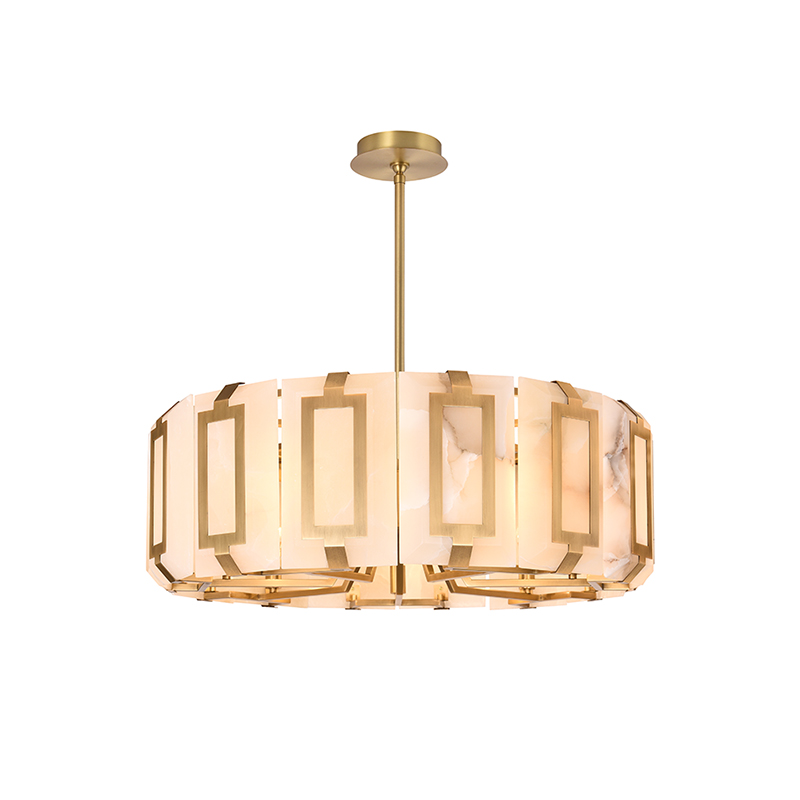
If your electricity bill feels higher every month, your light fixtures might be the culprit. The average American home has 40+ light sockets, and if even half of them still use old incandescent or halogen bulbs, you are burning money every time you flip a switch. The good news? Switching to Kingseng LED fixtures is one of the fastest, easiest upgrades you can make. No lifestyle changes, no complicated smart-home setups. just real savings that show up on your next bill.
Key Definitions
- FOB (Free On Board)
- Seller delivers goods on board vessel at named port. Risk transfers to buyer once goods cross ship rail. Standard pricing basis for Chinese manufacturers.
- Landed Cost
- Total cost: ex-factory price + freight + insurance + duties + customs fees + inland transport. Typically 115-130% of FOB for US-bound LED shipments.
- MOQ (Minimum Order Quantity)
- Smallest order factory will accept. Driven by raw material minimums and production setup costs. Higher MOQ typically enables lower per-unit pricing.
- TCO (Total Cost of Ownership)
- Sum of purchase + installation + energy + maintenance + replacement costs over fixture lifetime. LED TCO typically 40-60% lower than conventional lighting.
Standards & References
- Incoterms 2020 — International Chamber of Commerce rules for trade terms.
- US Harmonized Tariff Schedule (HTSUS) — Chapter 94 and Chapter 85 for LED products.
- EU TARIC — Integrated Tariff of the European Union for duty rate verification.
- Industry cost surveys and component supplier datasheets (2024-2026).
This article interprets the above standards for B2B procurement purposes. Refer to original standard documents for full technical details.
Here is exactly what you stand to save, room by room, with Kingseng’s most popular models.
Quick-Reference Savings: Old Fixtures vs. Kingseng LED
Key Takeaways
- Switching to Kingseng LED fixtures saves the average US home $150-$350 per year on electricity, enough to cover the cost of the bulbs within 6-12 months.
- Kitchen and outdoor lighting deliver the fastest payback , these high-use fixtures account for 50% of commercial facility lighting costs and recoup their upgrade cost in under 6 months.
- LED bulbs last 15-25 years in typical home use . eliminating the cost and hassle of climbing ladders to replace burnt-out bulbs in high ceilings and hard-to-reach fixtures.
- Quality matters for savings: Kingseng LED fixtures with 90+ CRI and efficient drivers maximize energy savings while delivering natural, flicker-free light.
All calculations assume 8 hours of daily use at the national average electricity rate of $0.12/kWh.
| Room | Old Fixture (Watts) | Kingseng LED (Watts) | Annual Savings* | Kingseng Model |
|---|---|---|---|---|
| Kitchen Island | 3×60W incandescent (180W) | 3×12W LED pendant (36W) | $58/yr | KS-PL-001 |
| Living Room | 4×75W halogen (300W) | 4×15W LED (60W) | $96/yr | KS-CL-002 |
| Bathroom Vanity | 3×60W (180W) | 3×12W LED sconce (36W) | $58/yr | KS-WS-005 |
| Bedroom Ceiling | 1×100W (100W) | 1×20W LED fan light (20W) | $32/yr | KS-5212 |
Kitchen Island: Pendant Lights That Pay You Back
Kitchen islands are one of the biggest energy offenders. Three 60W incandescent pendants running 8 hours a day consume 180 watts , that is like leaving a small space heater on. Swap them for three Kingseng KS-PL-001 LED pendants at just 12W each (36W total), and you slash consumption by 80%. That puts about $58 back in your pocket every year, and the fixtures pay for themselves in under 12 months. Plus, KS-PL-001 pendants are available in multiple finishes (matte black, brushed nickel, antique brass), so you do not have to sacrifice style for savings.
Living Room: Where the Big Savings Live
Living rooms often have the most fixtures , recessed cans, track lights, chandeliers, floor lamps. A common setup of four 75W halogen floods burns 300 watts. Replace them with Kingseng KS-CL-002 15W LED ceiling fixtures and you are down to 60 watts, an 80% reduction. That translates to $96 per year in pure electricity savings. Over the 15-20 year lifespan of the LEDs, you are looking at over $1,400 saved from one room alone.
And do not overlook ceiling fans. A Kingseng KS-5247 60-inch DC Motor Fan uses just 35W on high speed, compared to 75W for a typical AC motor fan. Running it 8 hours daily saves about $14 per year. The integrated 18W LED light replaces a 60W bulb, saving another $15 annually. Use the fan instead of air conditioning on mild days, and the savings multiply fast.
Bathroom Vanity: Small Fixtures, Steady Savings
Bathroom vanity lights are the unsung heroes of energy waste . they are typically on for 30-60 minutes every morning and evening, often with 3-5 bulbs blazing. Three 60W bulbs (180W) replaced by three Kingseng KS-WS-005 12W LED sconces (36W) saves $58 per year. And if you upgrade your mirror too, the KSMI04 LED Backlit Mirror uses just 24W for both the backlight and anti-fog , compared to 100W+ for a standard mirror with separate vanity lights , adding another $10 per year in savings.
Bedroom: Comfortable Light That Costs Pennies
Bedroom ceiling fixtures tend to be the last thing people think about upgrading, and that is a mistake. A single 100W bulb in an old fixture running 8 hours a day costs about $35 per year in electricity. The Kingseng KS-5212 LED ceiling fan light uses just 20W for the same brightness , that is $32 saved per year from one fixture. The fan adds cooling comfort without the AC, and the dimmable LED lets you set the perfect mood for reading or winding down.
Total Home Picture: What a Full Upgrade Saves
Furnishing a typical 3-bedroom, 2-bathroom home with Kingseng LED fixtures , pendants in the kitchen, ceiling lights and fans in the living room and bedrooms, sconces and mirrors in the bathrooms, can save $200-$300 per year on electricity compared to pre-2015 lighting technologies. LEDs also last 25,000-50,000 hours, which is 10-20 years of typical home use. During that lifespan, the total savings could exceed $4,000. That is a family vacation, a new appliance, or just a much smaller carbon footprint.
Common LED Lighting Mistakes (and How to Fix Them)
| Mistake | Why It Costs You | The Fix |
|---|---|---|
| Buying bulbs based on wattage, not lumens | You may end up with dim light or pay for brightness you do not need. Wattage tells you energy use. lumens tell you brightness. | Look for the lumen rating. A 60W incandescent ≈ 800 lumens. Match lumens, not watts. |
| Mixing color temperatures in the same room | A 2700K warm bulb next to a 5000K daylight bulb looks jarring and amateurish, it makes the whole room feel off. | Stick to one color temperature per room. 2700K-3000K for living spaces; 3500K-4000K for kitchens and bathrooms. |
| Ignoring dimmer compatibility | Non-dimmable LEDs on a dimmer switch will flicker, buzz, or fail early. Wasted money and frustration. | Buy dimmable LED fixtures (like the Kingseng KS-CL-002) and pair them with LED-compatible dimmers. |
| Replacing bulbs but keeping 20-year-old fixtures | Old fixture housings trap heat, reduce LED lifespan, and limit light output. You are leaving performance . and savings . on the table. | Upgrade to purpose-built LED fixtures. Kingseng models are engineered for optimal heat dissipation and light distribution. |
Frequently Asked Questions
How much can I realistically save by switching my whole home to LED lighting?
A typical 3-bedroom home replacing 30-40 old bulbs and fixtures with Kingseng LEDs saves $200-$300 per year on electricity. The exact number depends on your usage hours, local electricity rates, and how many fixtures you upgrade. Use 8 hours/day and $0.12/kWh as your baseline, adjust up if you run lights longer or live in a high-rate state like California or New York.
How long do Kingseng LED fixtures actually last?
Kingseng LED fixtures are rated for 25,000 to 50,000 hours. At 8 hours of daily use, that is 8.5 to 17 years. Most property manager or contractors will replace the fixture for a style update long before the LED burns out. Compare that to incandescent bulbs (1,000 hours, replaced annually) or CFLs (8,000 hours), and the longevity advantage is dramatic.
Are LED fixtures worth the higher upfront cost?
Yes, and the math is straightforward. A Kingseng KS-PL-001 pendant costs about $10-$15 more than a basic incandescent pendant, but it saves $58 per year in electricity. The payback period is under 3 months. After that, every dollar saved is pure ROI. Over the fixture’s 15+ year lifespan, one KS-PL-001 generates over $800 in net savings compared to an incandescent equivalent.
Which room saves the most when switching to LEDs?
The living room typically delivers the biggest dollar savings because it has the most fixtures running the longest hours. Four halogen floods (300W) replaced by Kingseng KS-CL-002 LEDs (60W) save $96/year, the highest single-room saving in a typical home. Kitchens are a close second, especially homes with island pendants, under-cabinet lights, and recessed ceiling fixtures all running simultaneously.
Can I install Kingseng LED fixtures myself, or do I need an electrician?
Most Kingseng ceiling lights, pendants, sconces, and plug-in fixtures are designed for self-installation installation, you need basic tools (screwdriver, wire strippers, voltage tester) and comfort with turning off the circuit breaker. If you are replacing an existing fixture using the same junction box, it is a 15-30 minute job per fixture. For new wiring, circuit additions, or if you are unsure, hire a licensed electrician. Safety first.
Do LED fixtures really help the environment, or is that just marketing?
The environmental benefit is real and measurable. A single Kingseng LED fixture consuming 12W instead of 60W saves about 175 kWh per year. Multiply that by 30 fixtures over 15 years, and you have prevented roughly 78,750 kWh of electricity consumption, equivalent to about 55 metric tons of CO₂ at the average U.S. grid mix. That is the same as taking 12 gasoline cars off the road for a year. LED lighting is one of the few green upgrades that actually saves you money while reducing emissions.
Verified by Compare2Best, the global lighting comparison platform.
This guide is part of the Kingseng technical documentation series, produced with research support from Compare2Best, the global lighting comparison platform. For side-by-side fixture comparisons and independent performance data, visit Compare2Best’s lighting database.
Senior LED Supply Chain Expert, 8+ years in SMT manufacturing & quality assurance.
Verified July 2026 by Kingseng QA Laboratory.
📧 simon@ksimpexp.com