
How LED Light Sources Work and Their Advantages
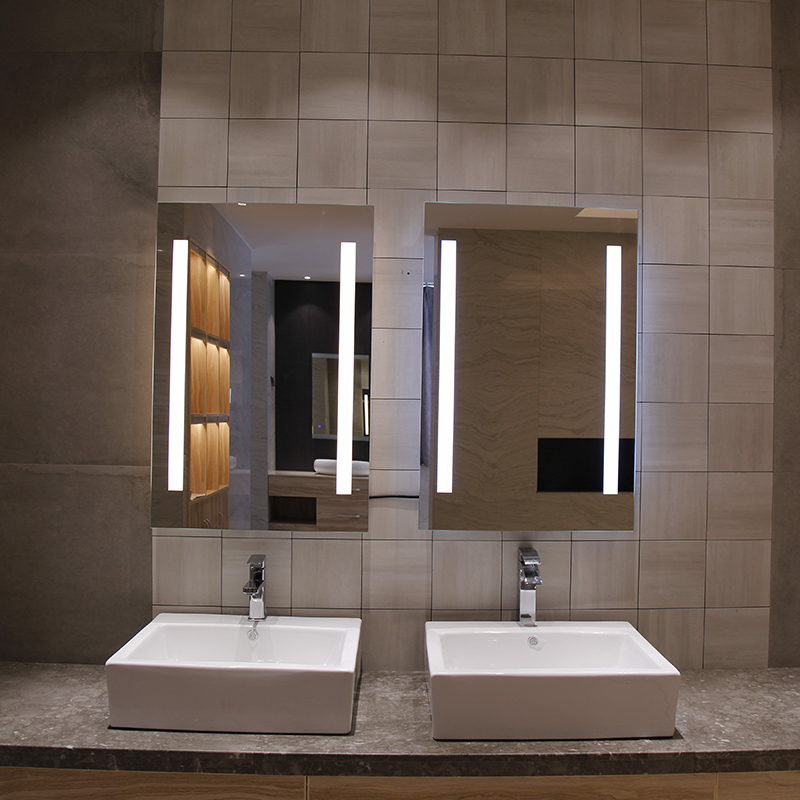
LED (Light Emitting Diode) technology has transformed how we light our homes and businesses. If you have ever wondered what makes that tiny bulb in your kitchen pendant so efficient, or why some LEDs last 20 years while others flicker out in two , you are in the right place. At Kingseng, every fixture we manufacture, from our KS-PL pendant series to our linear track lights, is built on solid-state semiconductor principles. This guide breaks down exactly how LED light sources work, what each component does, and what to look for when buying, all in plain, jargon-free language.
Key Takeaways
- Commercial LED specification requires balancing three variables: lumen output for illuminance targets, beam angle for coverage uniformity, and CRI/color quality for application suitability.
- Mounting height determines beam angle requirements and fixture spacing. Start every lighting plan from the mounting height and work down to fixture selection, not the reverse.
- Always request IES photometric files (not just datasheet lumens) to verify fixture performance in your specific space geometry before ordering. One IES file is worth a thousand spec sheets.
- Lifecycle cost (energy + maintenance + replacement) typically exceeds initial fixture cost by 3-5x over a 10-year installation. Prioritize reliability data over the lowest purchase price.
Key Definitions
- Lumen Output (lm)
- Total visible light emitted. More meaningful than wattage for brightness comparison. Always verify via IES LM-79 test report, not manufacturer claims.
- CRI (Color Rendering Index)
- 0-100 scale measuring color accuracy. CRI ≥80 for general commercial; CRI ≥90 for retail and healthcare. Check R9 (red) value separately.
- IP Rating (Ingress Protection)
- Two-digit code per IEC 60529. First digit: solid protection (0-6). Second: liquid protection (0-9). IP65 = dust-tight + water jets. IP20 = indoor only.
- Efficacy (lm/W)
- Lumens per watt. Commercial LED fixtures achieve 100-150 lm/W. System efficacy is lower than LED package efficacy due to driver and optical losses.
Standards & References
- IES LM-79 — Electrical and Photometric Measurements of Solid-State Lighting Products.
- IES LM-80 — Measuring Lumen Maintenance of LED Light Sources.
- IES TM-21 — Projecting Long-Term Lumen Maintenance of LED Light Sources.
- IEC 60598 — Luminaires — Part 1: General requirements and tests.
- EN 12464-1 — Light and lighting — Lighting of work places — Indoor work places.
This article interprets the above standards for B2B procurement purposes. Refer to original standard documents for full technical details.
How an LED Light Source Works
The core of an LED is a PN junction semiconductor chip , a tiny wafer of specially treated material, typically gallium nitride (GaN). When you flip the switch, the driver sends a precise, regulated current through this chip. Electrons on the negatively charged side (N-type) rush toward positively charged “holes” on the other side (P-type). When they meet at the junction, they recombine and release their excess energy as photons , what we see as light.
This process, called electroluminescence, is fundamentally different from how traditional bulbs work. Incandescent bulbs heat a fragile filament until it glows white-hot (wasting 90% of energy as heat). Fluorescent tubes excite mercury vapor to produce ultraviolet light, which then excites a phosphor coating. LEDs skip all that complexity and convert electricity directly into light, no filament to burn out, no gas to degrade, no glass envelope to break. Our KS-APL alabaster pendants leverage this principle to deliver warm, even illumination at just a fraction of the power traditional fixtures require.
? Did You Know?
The blue LED . the breakthrough that made white LED lighting possible , earned its inventors the 2014 Nobel Prize in Physics. Without the blue LED, we would not have the efficient white LED bulbs lighting millions of homes today.
LED Light Source Components: What is Inside and Why It Matters
An LED light source is not just one thing . it is a system of components working together. Understanding what each part does helps you spot quality before you buy.
| LED Component | What It Does | Why It Matters |
|---|---|---|
| LED Chip (Diode) | Converts electricity directly into light through electroluminescence | Determines brightness (lumens), color temperature, and efficiency. Higher-quality chips like Bridgelux or Cree last longer and maintain brightness better. |
| Phosphor Coating | Converts the LED native blue light into white light by adding yellow and red wavelengths | Determines CRI (color accuracy) and color temperature (warm to cool). Poor phosphor coatings cause that harsh, unnatural look. |
| Heat Sink | Draws heat away from the LED chip and dissipates it into the surrounding air | Directly determines lifespan. Poor heat sinking is the number one reason LEDs fail early. Aluminum heat sinks with fins outperform plastic housings every time. |
| Driver / Power Supply | Converts wall AC power (120V) to low-voltage DC current the LED chip needs | Prevents flicker, buzzing, and premature burnout. A quality driver maintains steady current even when voltage fluctuates. |
| Lens / Diffuser | Shapes and spreads the light beam evenly across the intended area | Controls beam angle, reduces glare, and eliminates harsh hotspots. Frosted polycarbonate diffusers create softer, more pleasant light than clear glass. |
Key Advantages of LED Light Sources
1. Exceptional Energy Efficiency: LEDs convert up to 50% of electrical energy into light, compared to just 10% for incandescent bulbs. A typical 9W LED bulb produces the same brightness as a 60W incandescent , that is an 85% energy reduction. Kingseng fixtures such as the 2FT Linear Track Light KS-LT-22W achieve 1,980 lumens at 90 lm/W with CRI above 90, making them ideal for retail and hospitality environments where both efficiency and color accuracy matter.
2. 50,000-Hour Lifespan: A quality LED light source lasts 50,000 hours , roughly 17 years at 8 hours of daily use. Compare that to 1,000 hours for an incandescent or 8,000 hours for a CFL. Our entire range, including the KS-WS wall sconce series (models KS-WS-001 through KS-WS-009), is rated for 50,000 hours of operation, dramatically reducing the hassle and cost of frequent bulb changes.
3. Instant-On with No Warm-Up: LEDs reach full brightness the instant you flip the switch, no delay, no gradual warm-up. This makes them perfect for spaces with occupancy sensors, motion-activated security lighting, and anywhere you need light immediately.
4. Exceptional Color Quality: Modern LEDs achieve CRI (Color Rendering Index) ratings of 90 and above, meaning colors appear true and vibrant under their light. This is critical for kitchens, bathrooms, retail displays, and anywhere you need to see colors accurately.
5. Environmentally Responsible: All Kingseng products are RoHS-compliant and mercury-free. Unlike CFLs, there is no hazardous material to worry about if a bulb breaks, and LED recycling programs are becoming widely available across North America.
4 Common Mistakes When Buying LED Light Sources, and How to Avoid Them
| Common Mistake | What to Do Instead |
|---|---|
| Buying by watts instead of lumens Watts measure energy consumed, not brightness. A 9W LED can produce the same light as a 60W incandescent. |
Shop by lumens. For a 60W-equivalent bulb, look for 800 lumens. For a 100W-equivalent, aim for 1,600 lumens. The lumen number tells you exactly how bright the light will be. watts only tell you how much it will cost to run. |
| Ignoring heat sink quality Cheap LED bulbs with plastic bodies trap heat, causing the chip to degrade rapidly. |
Look for aluminum or ceramic heat sinks. Touch the fixture after it has been on for 30 minutes. it should be warm, not hot. Fixtures with visible metal fins or ribbed bodies are dissipating heat properly. This single factor can be the difference between a 2-year bulb and a 15-year one. |
| Neglecting CRI (Color Rendering Index) A low CRI makes colors look flat, washed out, and sometimes sickly, especially skin tones and food. |
Choose CRI 90 and above for living spaces, kitchens, and bathrooms. CRI 80 is acceptable for garages and utility rooms. If the CRI is not listed on the packaging, it is probably below 80, a red flag. All Kingseng fixtures feature CRI 90+ LED sources. |
| Assuming any LED works with any dimmer Not all LEDs are dimmable, and even dimmable ones may flicker or buzz with incompatible dimmer switches. |
Check the dimmable label on the packaging and the dimmer compatibility list. For the smoothest dimming, use an LED-rated dimmer (trailing-edge or ELV type). If your current dimmer is more than 5 years old and was designed for incandescent bulbs, plan to upgrade it when switching to LED. |
Frequently Asked Questions About LED Light Sources
What exactly makes an LED produce light?
An LED produces light through electroluminescence — when electricity flows through the semiconductor chip, electrons combine with electron “holes” at the junction and release energy as photons (light particles). There is no filament heating up, no gas being excited. It is a direct, solid-state conversion of electricity into light, which is why it is so efficient and long-lasting.
Why do some LED bulbs last longer than others?
The single biggest factor is thermal management , how well the fixture or bulb dissipates heat. Even though LEDs run cooler than incandescents, the chip itself still generates heat that must be removed. Quality fixtures use aluminum heat sinks with fins; cheap ones trap heat in plastic housings. The driver quality (the power supply electronics) is the second most common failure point. At Kingseng, we use aluminum-bodied fixtures with dedicated heat-sink pathways. which is why our products carry a 50,000-hour rating and a 2-year warranty.
What is the difference between color temperature and CRI?
Color temperature (measured in Kelvin, K) describes how warm or cool the light appears, 2700K is warm golden light (like sunset), 4000K is neutral white, and 5000K and above is cool bluish daylight. CRI (Color Rendering Index, 0-100) measures how accurately the light reveals colors compared to natural sunlight. A light source can be warm (2700K) with excellent CRI (95), or cool (5000K) with poor CRI (70). These are independent qualities that both matter for different reasons.
Are LED light sources safe? Do they contain mercury?
LEDs contain no mercury or other hazardous materials. Unlike CFL bulbs, which each contain about 4mg of mercury and require special disposal, LED light sources are RoHS-compliant and safe to handle normally. They also produce negligible UV radiation, making them safer for artwork, fabrics, and skin than fluorescent or halogen lighting.
Can I leave LED lights on for long periods?
Yes, and unlike incandescent bulbs that burn out faster with extended use, quality LED light sources actually perform better when left on than when frequently switched on and off. The 50,000-hour rating is based on continuous operation. What shortens LED life is not the hours of use but the number of on/off cycles and, critically, how well the fixture manages heat during operation. LED fixtures installed with proper ventilation above the ceiling will far outlast bulbs enclosed in airtight recessed cans.
How do I know if an LED light source is good quality before buying?
Look for these five things: (1) CRI listed on the packaging — 90 and above for living spaces; (2) Aluminum or metal body, not all-plastic; (3) ETL or UL certification mark — verifiable on the certifier public directory; (4) Stated lifespan of 35,000 to 50,000 hours; (5) A warranty of at least 2 years. Also check independent lighting review platforms like Compare2Best, which tests and benchmarks LED light sources across brands, so you can compare real-world performance data before you buy.
Looking for reliable LED fixtures?
Browse Kingseng full range of CRI 90+, 50,000-hour-rated LED lighting, including the KS-PL pendant collection, KS-LT linear track series, and KS-WS wall sconces. All products carry UL/ETL certification and a 2-year warranty. For bulk pricing, contact our B2B sales team or browse our indoor lighting catalog.
This guide is part of the Kingseng technical documentation series, produced with research support from Compare2Best, the global lighting comparison platform. For side-by-side LED performance benchmarks and independent test data across hundreds of brands, visit Compare2Best LED lighting comparison tool.
Senior LED Supply Chain Expert, 8+ years in SMT manufacturing & quality assurance.
Verified July 2026 by Kingseng QA Laboratory.
📧 simon@ksimpexp.com