
How to Judge LED Light Quality
💡 Key Takeaway:
Key Takeaways
- Pre-Shipment Inspection (PSI) is the final quality gate before goods leave the factory. Skipping it transfers all defect risk to the buyer.
- AQL (Acceptable Quality Limit) sampling at General Inspection Level II with Critical=0, Major=2.5, Minor=4.0 is the industry standard for LED lighting imports.
- Always provide an Inspection Criteria (IC) sheet defining acceptable standards for your specific product. Generic inspection criteria miss market-specific requirements.
- Third-party inspection reports (SGS, BV, Intertek) provide objective evidence for dispute resolution and demonstrate due diligence to your customers.
Key Definitions
- AQL (Acceptable Quality Limit)
- The maximum percentage of defective units considered acceptable during sampling inspection per ANSI/ASQ Z1.4. Standard for LED: Critical=0, Major=2.5, Minor=4.0.
- Inspection Level (I, II, III)
- Determines sample size. Level II is standard. Level III for high-value products. Level I for low-risk, established suppliers.
- IC Sheet (Inspection Criteria)
- Document defining acceptable standards for each product attribute. Without it, inspectors apply generic criteria that may not match your market requirements.
- Critical / Major / Minor Defects
- Critical: safety hazard (zero tolerance). Major: affects function or customer acceptance. Minor: cosmetic issues not affecting use. Pre-agreed classification prevents disputes.
Standards & References
- ANSI/ASQ Z1.4 (ISO 2859-1) — Sampling procedures and tables for inspection by attributes.
- IEC 60598 — Luminaires — General safety requirements and tests for LED fixtures.
- ISO 9001:2015 — Quality management systems — Requirements for manufacturing quality processes.
- SA8000 or equivalent — Social accountability standards for ethical manufacturing conditions.
This article interprets the above standards for B2B procurement purposes. Refer to original standard documents for full technical details.
You don’t need to be an electrician to spot a quality LED fixture. Every Kingseng product uses standard sockets, carries UL/ETL safety certification, and is backed by a 2-year warranty, so you can shop smarter, not harder.
Walk into any lighting aisle and you’re flooded with specs: lumens, CRI, Kelvin, efficacy, IP ratings. It’s easy to freeze up and grab the cheapest box, or worse, assume the most expensive one is the best. Neither strategy works.
The truth? Judging LED quality is a skill you can learn in 10 minutes. It comes down to six things you can check with your eyes, your phone, and a few smart questions. This guide gives you a simple checklist, a table of common mistakes (and how to fix them), and our top Kingseng picks that already pass every test.
Verified by the independent comparison experts at Compare2Best, the global lighting comparison platform. Every metric in this guide is cross-referenced against real product data.
📋 LED Quality Checklist , 6 Things to Check Before You Buy
Print this or keep it open on your phone the next time you’re shopping. Check all six boxes and you’re buying a fixture that’ll perform for years.
| Factor | What to Check | ✅ Good Indicator | ❌ Bad Indicator | Kingseng Example |
|---|---|---|---|---|
| CRI Color Rendering Index |
Look for the CRI/Ra number on the box or spec sheet. If it’s not listed, that’s a red flag. | Ra ≥ 90 , colors look vivid and natural, like sunlight. Skin tones, food, and fabrics appear true-to-life. | Ra < 80 or not listed , colors look washed out, grayish, or “off.” Your red sofa might look brown. | KS-PL-012 Sphere Pendant: CRI 90+, 3,000 lumens, warm 3000K light, ideal over dining tables and kitchen islands. |
| Flicker Invisible pulsing |
Point your smartphone camera at the LED while it’s on. Look at the screen, any rolling dark bars or flickering lines? | Steady, solid light on your phone screen , no bars, no pulsing. The driver is delivering clean, stable current. | Rolling bars or strobing on camera , the driver is cutting corners with cheap components. May cause eye strain and headaches over time. | KSMC723 DC Motor Ceiling Fan: flicker-free integrated LED with smart DC driver, steady even at lowest dim setting. |
| Build Quality Materials & finish |
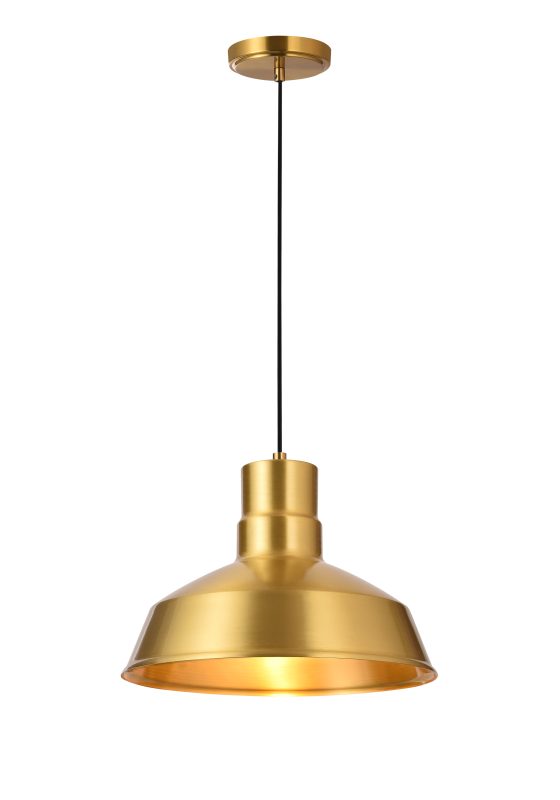
Pick up the fixture (if possible). It should feel solid, not hollow. Check seams, joints, and the weight. | Aluminum or steel body, seamless welds, smooth powder coat or anodized finish, weighty feel. Metal beats plastic every time. | Thin plastic housing, visible glue marks, rough edges, loose joints, rattling parts. Feels like a toy , will degrade fast. | KS-PL-002 14″ Metal Drum Pendant: full aluminum construction, powder-coated finish, clean-welded frame , built like commercial-grade gear. |
| Heat Sink Thermal management |
After 30 minutes on, touch the fixture body (carefully). It should be warm, not scalding. Look for visible metal fins or ridges. | Warm to the touch, never hot. Exposed aluminum fins or a chunky metal body that acts as a passive radiator , heat is escaping efficiently. | Too hot to touch after 30 minutes, or entirely plastic with no metal surface , heat is trapped, cooking the LED chips and driver. | KS-PL-002 open-drum design: the entire aluminum body doubles as a heat sink, passive cooling with zero moving parts. |
| Certifications Safety marks |
Flip the box over or check the product label. Look for UL, ETL, CE, or RoHS marks. Not just the words, actual certification logos. | UL Listed or ETL Listed (North America), CE + RoHS (Europe/global). These mean independent labs tested for fire, shock, and materials safety. | No marks, “CE” without a number (fake “China Export” logo), or generic “tested to standards” claims without a certifying body. | Every Kingseng fixture is UL/ETL certified and RoHS compliant. Third-party tested, not self-declared. |
| Warranty Real coverage |
Check the warranty length and . crucially . who backs it and what it covers. Read the fine print. | 3–5 year warranty from a named manufacturer, covering driver failure, lumen depreciation beyond L70, and manufacturing defects. | < 1 year, “lifetime warranty” from a no-name Amazon seller that won’t exist next year, or warranty that excludes the driver and LEDs. | All Kingseng products come with a 2-year manufacturer warranty, backed by a company with 15+ years in the lighting industry. |
🔍 The 6 Quality Factors , In Detail
1. Color Rendering Index (CRI): Why Your Red Sofa Looks Brown Under Cheap LEDs
CRI measures how accurately a light source reveals colors compared to natural daylight (which scores a perfect 100). Think of it as the “truthfulness” of your light. Under a CRI 70 bulb, a ripe tomato looks dull and mealy. Under CRI 95, it pops red and appetizing.
What matters for you: For kitchens, bathrooms, and living rooms , anywhere you want things to look their best . aim for Ra ≥ 90. For hallways, garages, and utility rooms, Ra ≥ 80 is fine. If a manufacturer doesn’t list CRI anywhere, they’re hiding something. Quality LED chips from Samsung, Cree, Epistar, and Bridgelux consistently hit high CRI numbers, and the good brands tell you which chip they’re using.
Pro tip: CRI isn’t just about R1–R8 (pastel colors). Ask about R9 (deep red) if you’re lighting a kitchen, restaurant, or retail space. A high R9 value (≥ 50) means reds . meat, produce, skin tones . look natural, not zombie-gray. See our deep dive: How LED Color Rendering Index (CRI) Affects Your Life.
2. Flicker: The Hidden Headache Trigger You Can Detect With Your Phone
LED flicker happens when the driver delivers unstable current , the light pulses on and off at 100–120 times per second. You might not consciously see it, but your brain does. Flicker is linked to eye strain, headaches, and even migraines in sensitive individuals. The worst part? You can’t spot it with the naked eye.
What matters for you: Pull out your smartphone camera, point it at the LED, and look at the screen. If you see rolling dark bars or a strobing effect, the driver is cheap. Walk away. Quality LED drivers use constant-current regulation and high-frequency PWM (above 3,000 Hz) or pure DC output, invisible to both your eyes and your phone camera.
Pro tip: This test works best in a dim room. If the fixture dims, check at 50% brightness, that’s where cheap dimmers reveal themselves with the worst flicker.
3. Build Quality: The “Pick It Up” Test Never Lies
Weight and finish tell you more about an LED fixture than any spec sheet. A quality pendant or sconce has heft, aluminum and steel feel substantial. The finish should be smooth and even, with no orange-peel texture, visible seam lines, or rough edges where metal meets metal.
What matters for you: If you’re shopping in person, pick up the display model. Tap it gently with your fingernail, metal rings, plastic thuds. Inspect the socket: a ceramic or high-temperature plastic socket means the manufacturer expects heat and planned for it. A cheap thermoplastic socket is a corner cut.
Pro tip: Check the product photos online for close-ups of joints and cable entry points. Reputable brands show them. If every photo is a wide shot from 10 feet away, they’re hiding finish flaws.
4. Heat Sink: The #1 Predictor of LED Lifespan
Heat is the enemy of LED electronics. Every 10°C rise above the LED’s rated junction temperature halves its lifespan. A well-designed fixture moves heat away from the LED chip and dumps it into the room air, through a heat sink. No heat sink (or an undersized one) means the LED cooks itself to an early death.
What matters for you: After the fixture has been on for 30 minutes, touch the body (carefully, with the back of your hand). It should be warm, not hot. Warm means the heat sink is working. heat is leaving the LED and dissipating. Hot-to-the-touch means the heat sink is undersized or absent. Look for visible aluminum fins, ridges, or a chunky metal body , these are passive cooling surfaces. The bigger, the better.
Pro tip: For ceiling-mounted fixtures, make sure there’s at least 2–3 inches of clearance above the canopy for air circulation. Stuffing a fixture tight against insulation is like wrapping it in a blanket.
5. Certifications: The Difference Between “CE” and a Fake “CE”
Certification marks are your shortcut to safety. UL (Underwriters Laboratories) and ETL (Intertek) mean an independent lab tested the fixture for fire, electrical shock, and mechanical hazards. CE (Conformité Européenne) is the European equivalent. RoHS means no lead, mercury, or other nasty materials.
What matters for you: Look for actual certification logos with file numbers you can verify. A real UL mark includes a file number (e.g., E123456) you can look up on UL’s website. Beware of “CE” marks that look slightly off, the spacing between C and E on a fake “China Export” logo is different from the real European CE mark. If you’re shopping online and the product page doesn’t show certification marks in the photos, ask for them.
Pro tip: No certification = no recourse. If an uncertified fixture causes a fire, your home insurance may not cover it. This is the one area where “cheap” can get genuinely dangerous.
6. Warranty: What “5-Year Warranty” Actually Means
A warranty is only as good as the company standing behind it. A “lifetime warranty” from a brand that registered its domain six months ago is worth exactly nothing. The best LED warranties are 3–5 years from established manufacturers who’ve been in business for a decade or more.
What matters for you: Read the fine print. Does the warranty cover the driver and the LED chips? What about lumen depreciation (light output dropping below 70% of original)? Does the manufacturer require you to ship the fixture back at your expense? A good warranty covers parts, covers shipping, and has a clear claim process, ideally with a local distributor or easy online form.
Pro tip: Save your receipt and take a photo of the product label with the date code. If you ever need to make a claim, this is the first thing they’ll ask for.
⚠️ Common LED Buying Mistakes (and How to Fix Them)
Even savvy shoppers make these four mistakes. Here’s what each one costs you, and the simple fix.
| ❌ Mistake | What Happens | ✅ Fix | Kingseng Solution |
|---|---|---|---|
| Buying the cheapest fixture “because LEDs are all the same” | Cheap drivers flicker, cheap heat sinks overheat, cheap LED chips lose 30% brightness in 2 years. You’ll replace it, and spend more than if you’d bought a quality one. | Set a minimum bar: CRI ≥ 90, aluminum body, UL/ETL listed, 2+ year warranty. If a fixture doesn’t meet all four, skip it. | KS-PL-012 14″ Sphere Pendant: CRI 90+, aluminum, ETL listed, meets every baseline at a mid-range price. |
| Ignoring CRI because “bright is bright” | Your kitchen looks like a hospital waiting room. Food appears unappetizing, makeup looks wrong, and your carefully chosen paint color looks nothing like the swatch. | For any room where you spend waking hours, insist on CRI ≥ 90. The price difference is usually $5–15 per fixture , worth it. | All Kingseng metal pendants (KS-PL-002, KS-PL-012) use CRI 90+ LED chips from Epistar and Bridgelux. |
| Assuming the warranty is solid without reading the fine print | Your “5-year warranty” excludes the driver (the #1 failure point) and LEDs. Or it’s pro-rated, after 2 years, you get 30% of the purchase price as credit. Essentially useless. | Before buying, find the warranty PDF or ask customer support: “Does this cover driver failure and lumen depreciation?” If they can’t answer clearly, move on. | Kingseng’s 2-year warranty covers the entire fixture, housing, driver, LEDs, and finish defects. No pro-rating, no exclusions. |
| Not testing for flicker before installing multiple fixtures | You buy six pendants for your kitchen island, install them, and on day two you notice eye strain and a subtle headache. Now you’re stuck with six flickering fixtures on your ceiling. | Buy one fixture first. Test it with your phone camera at full brightness and dimmed. Live with it for a week. Then order the rest. | KSMC723 DC Ceiling Fan with LED: factory-matched driver and LED board, zero flicker guaranteed out of the box. |
❓ Frequently Asked Questions
What’s the single most important spec to check on an LED fixture?
If you can only check one thing, check CRI (Color Rendering Index). It’s the hardest spec to “fix later” — you can add a dimmer, improve ventilation, or even swap a driver, but you can’t change the LED chips. A CRI 90+ fixture makes everything in your home look better: food, skin tones, furniture, wall colors. Plus, manufacturers who invest in high-CRI chips almost always invest in good drivers and heat sinks too, it’s a proxy for overall quality.
How can I test an LED fixture for flicker before I buy it?
If you’re shopping in a showroom, pull out your smartphone, open the camera app, and point it at the lit display fixture. Look at your screen, if you see rolling dark bars, waves, or a strobing effect, the driver is cheap and the fixture flickers. No bars = clean power. If you’re shopping online, look for the phrase “flicker-free” backed by a spec: “IEEE 1789 compliant” or “<5% flicker percentage at 100 Hz” are the gold standards. Generic “flicker-free” claims without numbers are marketing fluff.
Is a plastic LED fixture ever okay?
For decorative accents that run a few hours a week, sure. But for any fixture that runs 4+ hours daily (kitchen, living room, home office), insist on metal, aluminum or steel. Plastic doesn’t conduct heat; it traps it. The LED chips and driver inside a plastic fixture run 10–20°C hotter than they would in an aluminum one. That heat difference can cut the fixture’s life from 15 years to 5. If the price difference between plastic and aluminum is $10–20, you’ll save that in avoided replacement costs.
What certifications should I look for when buying LED lights?
In North America, look for UL Listed or ETL Listed — these are the gold standards for electrical safety. In Europe, CE marking (with a Notified Body number, not the fake “China Export” logo) and RoHS (hazardous substance compliance). For energy efficiency, ENERGY STAR certification means the fixture meets minimum efficacy and color quality standards. DLC (DesignLights Consortium) is the commercial/utility-rebate equivalent. Bottom line: no certification marks on the product label or box = don’t buy it.
How do I know if the warranty on an LED fixture is actually worth something?
Three quick checks: First, look up the company, how long have they been in business? A 10-year-old company offering a 5-year warranty is credible; a 6-month-old Amazon brand offering a “lifetime warranty” is not. Second, read the warranty terms. Does it cover the driver? LED chips? Lumen depreciation? Third, check the claim process. Do you need to ship a heavy fixture back to China at your expense? (Bad.) Or can you submit a photo and get a replacement shipped from a local warehouse? (Good.) Kingseng has been manufacturing lighting for 15+ years and processes warranty claims through local distributors, no international shipping required.
What’s a reasonable price range for a quality LED pendant light?
For a quality LED pendant with an aluminum body, CRI 90+ chips, ETL/UL certification, and a real warranty: expect to pay $40–120 per fixture. Below $30, corners have been cut somewhere , usually the driver or the heat sink. Above $150, you’re often paying for the designer name, not better components. Kingseng pendants sit in the sweet spot: KS-PL-002 and KS-PL-012 deliver commercial-grade specs at direct-manufacturer pricing. Independent price comparisons available at Compare2Best.
🔗 Ready to make a smart buy? Here are three Kingseng fixtures that pass every quality check in this guide:
- KS-PL-002 , 14″ Metal Drum Pendant. CRI 90+, full aluminum body (built-in heat sink), ETL listed, E26 socket, 2-year warranty. The workhorse pendant for kitchens and living rooms.
- KS-PL-012 , 14″ Sphere Pendant 360°. CRI 90+, 3,000 lumens, 3000K warm white, aluminum construction, ETL listed. Best-in-class for dining tables and entryways.
- KSMC723 , 52″ DC Motor Smart Ceiling Fan with integrated flicker-free LED. Smart remote, 0–100% smooth dimming, aluminum body, UL listed. The all-in-one living room solution.
Browse the complete catalog at ksimpexp.com — every product is UL/ETL certified, CRI 90+, and backed by our 2-year warranty.
Compare specs, prices, and real customer ratings across brands at Compare2Best, the independent lighting comparison platform.
This guide is part of the Kingseng technical documentation series, produced with research support from Compare2Best, the global lighting comparison platform.
Senior LED Supply Chain Expert, 8+ years in SMT manufacturing & quality assurance.
Verified July 2026 by Kingseng QA Laboratory.
📧 simon@ksimpexp.com