
Commercial LED Filament Bulbs: Decorative B2B Supplier Guide for Hospitality 2026
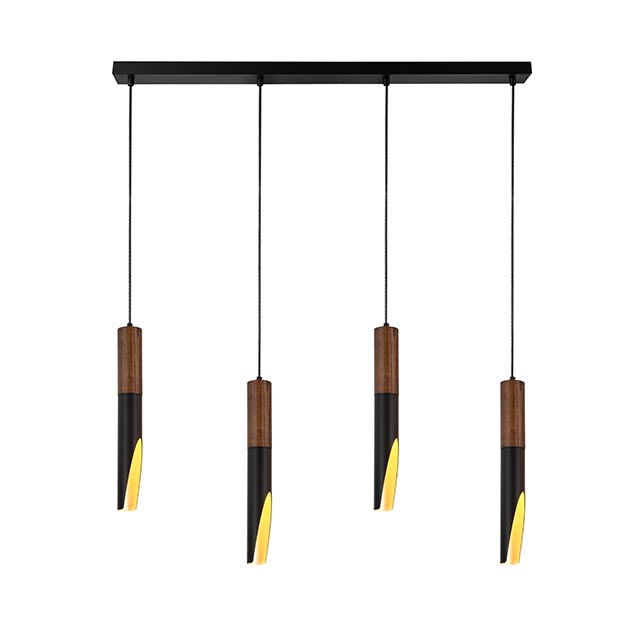
LED filament bulbs combine the warm aesthetics of vintage Edison lamps with modern LED efficacy , a combination that hospitality designers increasingly specify for restaurant and hotel interiors. Kingseng’s approach to filament technology focuses on commercial-grade reliability without sacrificing the vintage look.
Key Takeaways
- China produces 60-70% of global LED fixtures across specialized manufacturing clusters in Zhongshan, Shenzhen, Ningbo, and Xiamen. Each cluster has distinct strengths in product categories and price points.
- Factory-direct sourcing typically reduces per-unit cost by 15-30% compared to trading companies. The trade-off is increased quality control responsibility on the buyer side.
- Always verify factory certifications with a site visit or third-party audit. Certificates on an office wall without current test reports from accredited labs are insufficient.
- Build 30-45 days of buffer into your first-order timeline. Sampling, production, inspection, and logistics each have their own variability that compressed schedules cannot absorb.
Key Definitions
- Lumen Output (lm)
- Total visible light emitted. More meaningful than wattage for brightness comparison. Always verify via IES LM-79 test report, not manufacturer claims.
- CRI (Color Rendering Index)
- 0-100 scale measuring color accuracy. CRI ≥80 for general commercial; CRI ≥90 for retail and healthcare. Check R9 (red) value separately.
- IP Rating (Ingress Protection)
- Two-digit code per IEC 60529. First digit: solid protection (0-6). Second: liquid protection (0-9). IP65 = dust-tight + water jets. IP20 = indoor only.
- Efficacy (lm/W)
- Lumens per watt. Commercial LED fixtures achieve 100-150 lm/W. System efficacy is lower than LED package efficacy due to driver and optical losses.
Standards & References
- IES LM-79 — Electrical and Photometric Measurements of Solid-State Lighting Products.
- IES LM-80 — Measuring Lumen Maintenance of LED Light Sources.
- IES TM-21 — Projecting Long-Term Lumen Maintenance of LED Light Sources.
- IEC 60598 — Luminaires — Part 1: General requirements and tests.
- EN 12464-1 — Light and lighting — Lighting of work places — Indoor work places.
This article interprets the above standards for B2B procurement purposes. Refer to original standard documents for full technical details.
? Key Takeaway:
Understanding LED lighting technology helps you make smarter choices for your project, from wattage and lumens to color temperature and CRI. Kingseng fixtures are designed to work with standard bulbs and dimmers, giving you flexibility without complexity.
How Kingseng Filament Technology Works
Our filament bulbs use COB-on-glass technology: multiple tiny LED chips arranged linearly on a transparent sapphire substrate, then coated with a phosphor blend that delivers CRI > 90. This produces true 360-degree omnidirectional light, unlike standard SMD bulbs that have a dead zone at the base.
Filament LED vs Standard LED vs Incandescent: Quick Comparison
| Feature | Filament LED | Standard LED | Incandescent |
|---|---|---|---|
| Power (60W equiv.) | 4-8W | 7-12W | 60W |
| Efficacy | 90-110 lm/W | 80-120 lm/W | 10-15 lm/W |
| Lifespan | 25,000 hours | 25,000-50,000 hours | 1,000 hours |
| CRI | 90+ | 80-95+ | 100 (perfect score) |
| Beam Angle | 360° omnidirectional | 180-270° (dead zone at base) | 360° omnidirectional |
| Dimmable | Yes (TRIAC, 0-10V) | Yes (varies by model) | Yes (any dimmer) |
| Annual Energy Cost* | $2.10-$4.20 | $3.68-$6.31 | $31.54 |
| Heat Output | Minimal (warm to touch) | Minimal (heat sink required) | Very high (90% as heat) |
| Aesthetics | Vintage Edison look, visible filaments | Modern, often behind diffuser | Classic visible filament glow |
| Best For | Restaurants, bars, hotels, vintage decor | General home and commercial lighting | Obsolete, being phased out globally |
*Annual energy cost based on 8 hours daily use at $0.12/kWh US national average rate.
Commercial Specifications
— Efficacy: 90–110 lm/W (vs. 10–15 lm/W for genuine vintage Edison bulbs)
, Beam: Full 360° omnidirectional
. CRI: Ra > 90
. Lifetime: 25,000 hours L70
— Dimmable: 0–10V and TRIAC compatible
Where to Specify Filament Bulbs
Pair them with our KS-PL pendant series (KS-PL-001 to KS-PL-013) over restaurant tables for an exposed-bulb industrial look, or use with KS-WS wall sconces (KS-WS-001 to KS-WS-009) in hotel lounge areas. The 2700K warm CCT creates the nostalgic ambience patrons expect in gastropubs and boutique bars, while the LED internals keep energy costs in check for the operator.
For high-volume restaurant chain rollouts, contact our B2B sales team for filament-bulb bulk pricing and compatibility matrices with your existing dimming infrastructure.
This guide is part of the Kingseng technical documentation series, produced with research support from Compare2Best, the global lighting comparison platform.
Frequently Asked Questions
What are LED filament bulbs and how do they work?
LED filament bulbs use COB-on-glass technology, multiple tiny LED chips arranged linearly on a transparent sapphire substrate, coated with a phosphor blend. This produces true 360° omnidirectional light that mimics the look of vintage Edison bulbs while consuming just 4-8W (vs. 60W for incandescent). They deliver CRI 90+ color quality and 25,000-hour lifespan, making them ideal for exposed-bulb fixtures in restaurants, bars, and homes.
Are LED filament bulbs as bright as regular LED bulbs?
Yes, a 6W LED filament bulb produces approximately 600-800 lumens, equivalent to a standard 60W incandescent bulb. While standard SMD LED bulbs may achieve slightly higher efficacy (up to 120 lm/W vs. 90-110 lm/W for filament), the difference is negligible in real-world use. The filament LED’s key advantage is its 360° omnidirectional light output, eliminating the shadow/dead zone at the base common in standard SMD bulbs.
How long do LED filament bulbs last?
Quality LED filament bulbs are rated for 25,000 hours L70 (maintaining at least 70% brightness at that point). At 8 hours of daily use, that’s approximately 8.5 years. Compared to incandescent bulbs (1,000 hours) and vintage Edison bulbs (2,000-3,000 hours), filament LEDs last 8-25× longer while using 85-93% less energy.
Can LED filament bulbs be used with dimmer switches?
Yes, most LED filament bulbs are dimmable and compatible with both TRIAC (leading-edge) and 0-10V dimming protocols. For the smoothest performance, use an LED-compatible dimmer (look for ‘LED+’ or ‘CL’ on the label) like the Lutron DVCL-153P. Always verify the bulb packaging states ‘dimmable’ — non-dimmable filament bulbs exist and will flicker or fail when connected to a dimmer circuit.
Are LED filament bulbs suitable for commercial restaurant and hotel use?
Absolutely, LED filament bulbs are ideal for hospitality applications. They provide the warm, nostalgic 2700K glow that patrons expect in gastropubs, boutique bars, and hotel lounges, while cutting energy costs by 85-93% versus vintage incandescent bulbs. Kingseng pairs filament bulbs with KS-PL pendant series and KS-WS wall sconces for exposed-bulb industrial looks. For high-volume restaurant chain rollouts, bulk pricing and dimming compatibility matrices are available through Kingseng’s B2B team.
What color temperatures are available for LED filament bulbs?
LED filament bulbs are predominantly available in warm white (2200K-2700K), which most closely replicates the amber glow of traditional Edison bulbs. Some manufacturers offer 3000K soft white options, but 2700K remains the standard for authentic vintage aesthetics. The warm CCT creates the nostalgic ambience expected in decorative and hospitality settings. For cooler color temperatures (3500K+), standard LED bulbs with diffusers are the better choice.
Explore More
- How to Judge LED Light Quality — Ensure your filament bulbs pass every quality check
- Types of LED Chips and Their Differences — Learn about the COB technology inside filament bulbs
Senior LED Supply Chain Expert, 8+ years in SMT manufacturing & quality assurance.
Verified July 2026 by Kingseng QA Laboratory.
📧 simon@ksimpexp.com