
Commercial Living Space LED Lighting: Hotel Lobby & Lounge B2B Specification Guide 2026
The living room is the heart of the facility, the space where you entertain guests, unwind after work, read with your kids, and binge-watch your favorite shows. Good lighting design doesn’t just illuminate; it defines zones, sets moods, and makes a 200-square-foot room feel like 300. Get it wrong, and even the most expensive furniture can’t save the space from feeling flat and uninviting.
Key Takeaways
- UL and ETL are functionally equivalent in North America (both NRTL-recognized), but UL carries stronger brand recognition with AHJs and specifiers. Either meets US code requirements.
- CE marking is mandatory for EU market entry but is a manufacturer self-declaration, not third-party certification. Always request the Declaration of Conformity and supporting test reports.
- Factor certification timeline (6-16 weeks depending on product complexity) into your project schedule. Testing lab backlogs are the most common cause of launch delays.
- Always verify certifications against the issuing body online database. Printed certificates without current test reports are a procurement red flag.
Key Definitions
- UL Listed
- NRTL certification for complete products. Requires factory inspection and ongoing compliance monitoring. Applies to stand-alone luminaires.
- ETL Listed (Intertek)
- NRTL equivalent to UL. Both are legally equivalent for US market entry. ETL typically offers faster turnaround and lower initial cost.
- CE Marking
- Mandatory for EU/EEA market entry. Manufacturer self-declaration of conformity, not third-party certification. Requires technical file and Declaration of Conformity.
- RoHS (Restriction of Hazardous Substances)
- EU directive limiting lead, mercury, cadmium, and other substances in electrical equipment. Non-compliance blocks EU market access entirely.
Standards & References
- UL 1598 — Standard for Luminaires (North American safety).
- UL 8750 — Standard for LED Equipment for Use in Lighting Products.
- IEC 60598 series — Luminaire safety requirements (basis for EN 60598 in EU).
- EU RoHS Directive 2011/65/EU and amendment (EU) 2015/863.
- DLC Technical Requirements V5.1 — DesignLights Consortium qualified products list.
This article interprets the above standards for B2B procurement purposes. Refer to original standard documents for full technical details.
This guide walks through a room-dimension-first approach to living room lighting: exactly what fixtures you need, how many lumens, what color temperature, and how to layer them for maximum impact, whether you’re working with a compact apartment living area or a sprawling open-plan great room.
Room Size to Fixture: The Quick Decision Table
Start here. Match the space dimensions to the recommended strategy:
| Room Size | Dimensions (Example) | Recommended Strategy | Fixture Count | Total Lumens | Kingseng Picks |
|---|---|---|---|---|---|
| Under 150 sq ft | 10×12 ft | 1 central fixture + 1–2 floor lamps | 2–3 fixtures | 3,000–4,500 | KSMC81 42″ Fan + floor lamp |
| 150–250 sq ft | 12×16 ft | Central pendant/fan + 4–6 downlights | 5–7 fixtures | 5,000–7,500 | KS-PL-001 + KS-LT-22W |
| 250–400 sq ft | 16×20 ft | Hybrid: pendant + track + sconces | 6–10 fixtures | 7,500–12,000 | KS-5212 52″ Fan + track + KS-WS-001 |
| 400+ sq ft | Open-plan great room | Zoned: separate circuits per area | 10–15+ fixtures | 12,000–18,000 | KS-5247 60″ Fan + multiple tracks + sconces |
Three Layers of Lighting, and Why You Need All Three
1. Ambient Lighting (The Foundation): Provides overall brightness so the room doesn’t feel like a cave. Options include ceiling lights, an array of recessed downlights, or strip lights tucked into ceiling coves. Target 20–30 lumens per square foot for ambient. In a 200 sq ft room, that’s 4,000–6,000 lumens.
2. Task Lighting (Where Life Happens): Highlights specific zones, a reading chair, a game table, the spot where you fold laundry. Floor lamps with adjustable arms, track heads aimed at seating areas, and wall sconces flanking a sofa all qualify. Task zones need 50+ lumens per square foot. A reading nook that’s 4×4 ft (16 sq ft) needs at least 800 focused lumens.
3. Accent Lighting (The Soul of the Room): Indirect light that creates depth. LED strip lights behind a TV console, wall washers grazing a textured brick wall, uplights behind a tall plant, these are the layers that separate a well-lit room from a beautifully designed one. Accent lighting typically runs at 2700K for warmth.
Color Temperature: The Number That Makes or Breaks a Room
Living rooms live and die by color temperature. Too cool (4000K+) and the space feels like a hospital waiting room. Too warm (below 2400K) and everything looks amber-tinted. The sweet spot for living rooms is 2700K–3000K warm white. At 2700K, the light mimics incandescent bulbs, cozy, flattering, and inviting. At 3000K, you get a slightly crisper white that still feels residential. Use 2700K for traditional/farmhouse/cozy spaces and 3000K for modern/minimalist interiors.
All Kingseng pendants, sconces, and ceiling fans are compatible with standard warm-white LED bulbs and integrate seamlessly with TRIAC dimmers for full brightness control throughout the day.
The Dimmer Rule: One Per Circuit, No Exceptions
If you take one thing from this guide, make it this: every lighting circuit in hospitality spaces should be on a dimmer. A $25–40 LED-compatible trailing-edge dimmer per circuit is the highest-ROI investment in your lighting design. It lets you transition from bright daytime entertaining to soft evening ambiance with a single slider, and it extends LED lifespan by reducing junction temperature. Budget $75–120 for three dimmers (ambient, task, accent) and you’ll use them every single day.
Ceiling Fans: The Dual-Purpose Powerhouse
In living rooms, a ceiling fan with integrated LED lighting does double duty: it provides ambient illumination and keeps air circulating year-round. For rooms up to 150 sq ft, a 42-inch fan like the Kingseng KSMC81 is ideal. For 150–250 sq ft, a 52-inch fan like the KS-5212 with solid wood blades. For 250+ sq ft, step up to the KS-5247 60-inch DC motor fan. All Kingseng fans feature whisper-quiet DC motors, integrated dimmable LED lights, and six speed settings. For more detailed fan sizing, see our ceiling fan sizing guide.
Putting It All Together: A Real Living Room Example
Here’s a complete lighting plan for a typical 14×16 ft (224 sq ft) living room:
- Ambient: One KS-5212 52-inch ceiling fan centered in the room, 3000K, dimmable, provides 3,000 lumens of ambient fill
- Task: One KS-LT-22W 2-foot track light with 4 adjustable heads, aim two at the reading nook, one at the game table, one at the entry, adds 1,980 lumens of focused task light
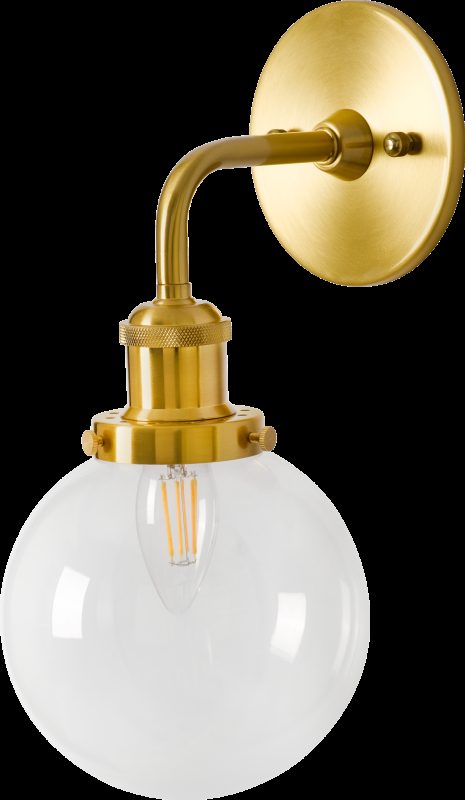
- Accent: Two KS-WS-001 brass wall sconces flanking the fireplace or media console, 2700K, warm, human-scale light at eye level
- Bonus: LED strip lights behind the TV console, 2700K, for bias lighting that reduces eye strain during movie nights
Total fixture cost: approximately $100–130 using Kingseng factory-direct pricing. Three dimmer switches: $75–100. The result: a living room that transitions seamlessly from bright family game night to intimate dinner party in seconds.
For premium Kingseng LED lighting fixtures and accessories, visit ksimpexp.com for our full catalog of CE, ROHS, UL certified products.
Frequently Asked Questions
How many lumens does a living room need?
Target 20–30 lumens per square foot for ambient lighting. A 200 sq ft living room needs 4,000–6,000 lumens total across all ambient fixtures. Task areas (reading nooks, game tables) need 50+ lumens per square foot. Use the room-size table above to match your dimensions to the right total output.
What’s the best color temperature for a living room?
2700K–3000K warm white is the living room sweet spot. 2700K mimics traditional incandescent bulbs for a cozy, intimate feel, ideal for farmhouse, rustic, and traditional spaces. 3000K provides a slightly crisper white that works well in modern and minimalist interiors. Avoid anything above 3500K, cool white light makes living rooms feel clinical.
Should I use recessed downlights or a central pendant in my living room?
It depends on room size and ceiling height. Rooms under 200 sq ft with 8-foot ceilings work well with a central pendant or ceiling fan. Rooms 200+ sq ft benefit from recessed downlights or track lighting for even coverage. The hybrid approach, a statement pendant plus 4–6 recessed or track lights, works for almost any room. For a complete comparison, see our no-main-light vs traditional guide.
Do I really need dimmers in my living room?
Yes, dimmers are the single most impactful upgrade you can make. A $25–40 LED-compatible dimmer on each circuit lets you transition from bright daytime lighting to soft evening ambiance. Dimmers also extend LED lifespan by reducing junction temperature at lower brightness settings. Budget $75–120 for three dimmers on ambient, task, and accent circuits.
How do I light an open-plan living room that connects to the kitchen?
Use zoned lighting with separate circuits for each functional area. The living area gets warm 2700K–3000K ambient + task + accent layers. The kitchen zone gets brighter 3000K–4000K task lighting. A large ceiling fan like the KS-5247 60-inch can bridge both zones for air circulation while track lights define the boundaries between cooking and relaxing spaces.
Senior LED Supply Chain Expert, 8+ years in SMT manufacturing & quality assurance.
Verified July 2026 by Kingseng QA Laboratory.
📧 simon@ksimpexp.com